


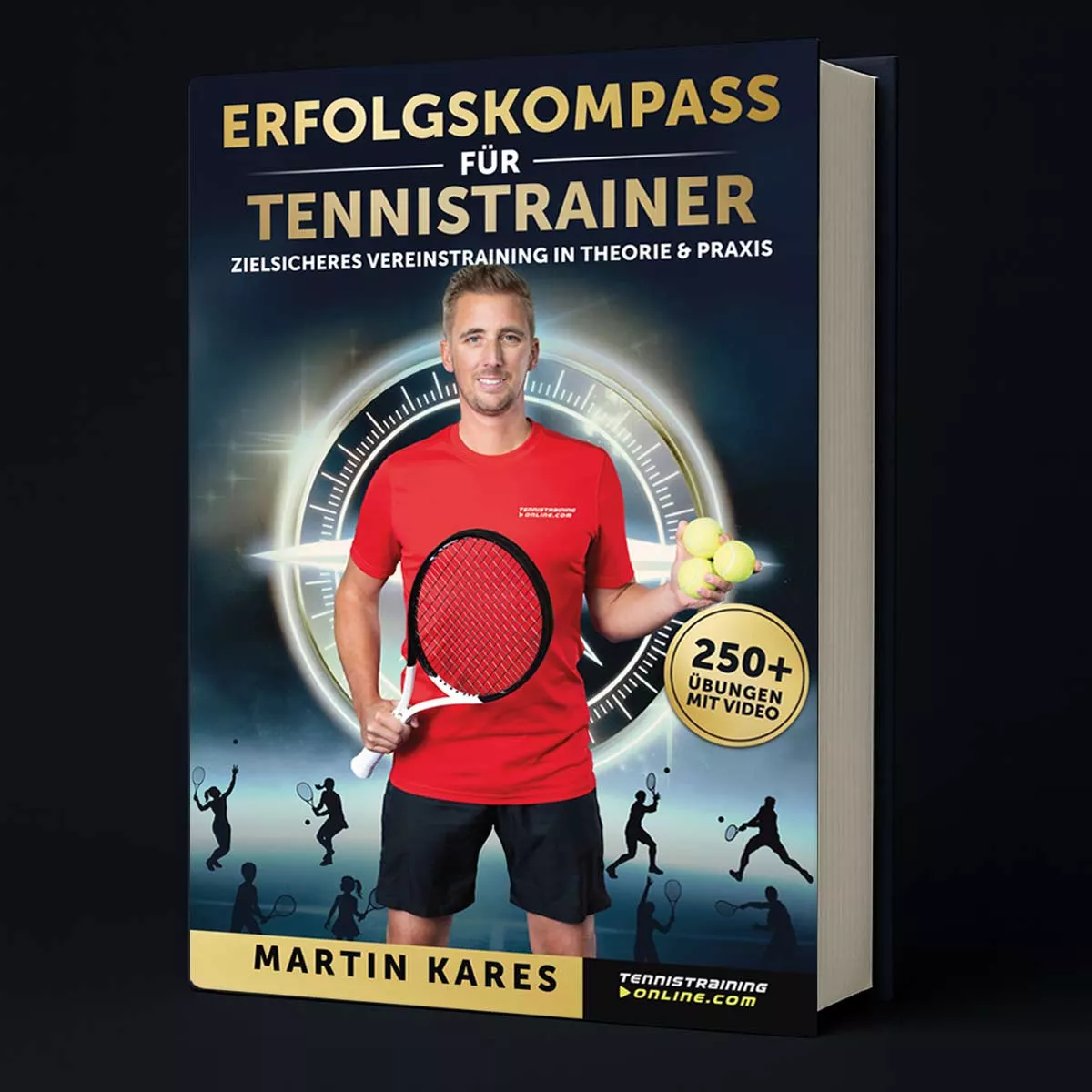


Theorie mit Substanz – für Trainer mit Anspruch
Der theoretische Teil dieses Buches richtet sich an Tennistrainer, die ihre Trainingsarbeit bewusst gestalten und weiterentwickeln möchten. Es geht um mehr als Technik – im Fokus stehen die Trainerpersönlichkeit, methodisches Denken und eine klare Struktur im Trainingsalltag.
Im Mittelpunkt stehen die wichtigsten Kompetenzen eines erfolgreichen Vereinstrainers:
Zielsetzung im Training – Wie man klare, realistische Ziele definiert und Trainingseinheiten darauf aufbaut
Motivation im Trainingsalltag – Wie man Spieler inspiriert und ihre individuelle Entwicklung unterstützt
Kommunikation auf dem Platz – Wie man klar und respektvoll mit Spielern und Eltern kommuniziert
Umgang mit Konflikten – Wie man selbstbewusst auf Herausforderungen reagiert und sie konstruktiv löst
Gewinnung neuer Vereinsmitglieder – Wie man das Programm mithilfe von Social Media, Schulkooperationen oder Clubevents erweitert
Turniertennis - und Umgang mit Talenten im Training
Zusätzlich enthält der theoretische Teil viele Impulse zur Trainingsplanung, zur Rolle des Trainers im Verein und zur persönlichen Weiterentwicklung.
Über 250 Übungen für die Praxis – durchdacht, variabel, sofort einsetzbar
Im praktischen Teil findest du mehr als 250 Übungen, Spielformen und Trainingsideen – für Kinder, Jugendliche, Erwachsene und Mannschaften jeder Spielstärke. Der Aufbau ist praxisnah, übersichtlich und sofort anwendbar. Außerdem weitere, dutzende Bonusübungen, teilweise kommentiert vom Autor.
Diese Themen erwarten dich:
Aufwärmen – Übungen und Spiele für Einzelspieler, Paare und Gruppen
Einspielen – Für Kleinfeld und Großfeld – technisch, taktisch, spielerisch
Technikerwerb & Technikanwendung – Vorhand, Rückhand, Volley, Aufschlag, Rückschlag
Doppeltraining – Spielformen für Stellungsspiel, Rhythmus und Teamarbeit
Kindertraining – Abgestimmt auf die rote, orange und grüne Stufe
Mannschaftstraining – Teambuilding, Gruppenübungen und Spielformen
Club-Events und Wettbewerbe – Ideen für besondere Trainingstage, Turniere und Feiern
Alle Übungen sind methodisch aufgebaut, flexibel anpassbar und mit klaren Zielen versehen. Sie lassen sich sofort ins Training integrieren – egal ob du mit Anfängern oder Fortgeschrittenen arbeitest.
Für wen ist dieses Buch gemacht?
Dieses Buch ist für Coaches, die Herz, Struktur und Ehrgeiz mit auf den Platz bringen.
Ob du gerade erst deine Coaching-Reise beginnst oder nach vielen Jahren auf dem Platz neue Inspiration suchst – dieses Buch gibt dir Werkzeuge, Wissen und Ideen, um dein Coaching auf das nächste Level zu bringen.
Es ist Fachliteratur mit Persönlichkeit – praxisnah, ehrlich, motivierend. Und gemacht für alle, die das Beste aus sich und ihren Spielern herausholen wollen.
Hinweis
Dieses Buch enthält einen einmaligen Zugangscode für exklusive digitale Inhalte (250 praktische Übungen). Sobald der Code eingelöst wurde, gilt der digitale Dienst als gestartet. Mit der Einlösung des Zugangscodes verzichtest du auf dein gesetzliches Widerrufsrecht (§ 356 (5) BGB). Bitte löse den Code nur ein, wenn du mit dieser Bedingung einverstanden bist.









Sven Fürst –
Super Buch, ich verschlinge es förmlich und hoffe hier viele nützliche Tipps für eine effektives und abwechslungsreiches Kindertraining zu erhalten.
Verifizierter Kauf. Mehr Informationen
Martin Kares –
Hallo Sven, vielen lieben Dank für Deine Bewertung. Es freut mich sehr, dass Dir mein Buch gefällt.
Kerstin Macht –
Endlich mal ein Buch, dass ein normaler Vereinstrainer wirklich verwenden kann! Es ist nicht nur einzigartig durch die tollen Videos, die bei jeder Übung verlinkt ist, sondern auch die vielen Bilder und exakten Beschreibungen lassen einen die Spiel-und Übungsformen sofort verstehen. Man merkt einfach, dass alles tatsächlich aus der Trainerpraxis stammt. Ein absolutes Must-have für jeden Verein(strainer).
Verifizierter Kauf. Mehr Informationen
Martin Kares –
Hallo Kerstin, ganz vielen lieben Dank für die warmen Worte. Freut mich sehr, dass due das Buch weiterhilft 🙏
Carsten –
Sehr gute Erklärungen, viele verschiedene Übungen, von denen die meisten auch sehr schnell umgesetzt werden können. Nette Anekdoten aus seiner eigenen Zeit mit eingearbeitet. Von mir eine Empfehlung.
Verifizierter Kauf. Mehr Informationen
Martin Kares –
Vielen Dank Carsten! In Kürze wird der EKFT noch um ein weiteres großes Kapitel erweitert. Turniertennis – findest du dann im E-Book als Ergänzung. Liebe Grüße!
Andreas B. –
Super Buch! Detailreich, gut gegliedert und extrem hilfreich bei der Vorbereitung von Trainingsstunden.
Verifizierter Kauf. Mehr Informationen
Martin Kares –
Hallo Andreas,
vielen Dank! Es folgt noch ein weitere Kapitel “Turniertennis”. Dieses wird in Kürze in deinem E-Book verfübgar sein. LG Martin
Christian –
Ein tolles Buch, das sich wunderbar liest und von dem ich sehr viel mitnehemen kann
Ich folge Martin schon lange auf Tennistraining-Online und YouTube und habe mir sein Buch natürlich sofort bestellt. Danke, mach weiter so!
Verifizierter Kauf. Mehr Informationen
Martin Kares –
Lieber Christian,
vielen Dank, dass du dir die Zeit genommen hast, das Buch zu bewerten. Dein Feedback bedeutet mir sehr viel. Dankeschön!
Steffen –
Absolutes muss für jeden Vereinstrainer. Danke Martin für diesen tollen Ratgeber.
Verifizierter Kauf. Mehr Informationen
Martin Kares –
Vielen lieben Dank Steffen!
Andreas Schumann –
Verifizierter Kauf. Mehr Informationen
mikaun –
1734g geballtes Wissen. Meines wiegt jedenfalls soviel – ohne Lesezeichen.
Neben den sehr gut gegliederten praktischen Übungen ist auch ein sehr ausführlicher und wertvoller theoretischer Teil enthalten. Gewürzt mit Anekdoten und persönlichen Erfahrungen. Informativ und unterhaltsam.
Verifizierter Kauf. Mehr Informationen
Martin Kares –
@mikaun – ganz vielen lieben Dank für dein Feedback!
Carlos Pirrung –
Top-Ratgeber mit überschaubaren, knackigen Absätzen ohne Aufkommen von Langatmigkeit.
Alles rund um Organisation und Durchführung von Vereinsarbeit im Tennisclub; vor allem natürlich der Trainertätigkeit präsentiert von unserem sympathischen Martin. Im digitalen Zeitalter seit langem nochmal Zuwachs in meinem Bücherregal. Klare Empfehlung. Die lange Arbeit und Mühe hat sich wirklich gelohnt !
Verifizierter Kauf. Mehr Informationen
Martin Kares –
Lieber Carlos, ganz vielen lieben Dank für dein Feedback! Hat mich sehr gefreut. Liebe Grüße!
Christian Ebel –
Verifizierter Kauf. Mehr Informationen
Martin Kares –
Vielen Dank für dein Feedback Christian!
Steve König –
Als jemand, der erst vor etwa zwei Jahren mit dem Tennisspielen begonnen hat und sich inzwischen entschieden hat, einen Trainerschein zu machen, war ich auf der Suche nach einem verständlichen und praxisnahen Buch, das mich auf diesem Weg unterstützt. Genau das habe ich mit diesem Tennistrainerbuch gefunden.
Das Buch ist außergewöhnlich klar strukturiert und unglaublich gut verständlich geschrieben – selbst für jemanden wie mich, der noch nicht lange im Tennis zuhause ist. Martin erklärt technische, taktische und methodische Inhalte so, dass man sie nicht nur schnell nachvollziehen, sondern auch direkt auf dem Platz anwenden kann. Besonders wertvoll fand ich die vielen praxisnahen Beispiele, die detaillierten Erklärungen zur Trainingsgestaltung und die Hinweise, worauf Trainer in unterschiedlichen Alters- und Leistungsklassen achten sollten.
Nachdem ich mich entschieden hatte, den Trainerschein zu machen, habe ich mir das Buch gekauft – und es hat sich sofort bezahlt gemacht. Ich habe unzählige hilfreiche Tipps daraus mitgenommen, sowohl für mein eigenes Spiel als auch für das zukünftige Training mit anderen. Viele Übungen konnte ich direkt ausprobieren, was mir enorm geholfen hat, ein besseres Verständnis für Bewegungsabläufe und Trainingsmethoden zu entwickeln.
Insgesamt kann ich das Buch allen empfehlen, die sich auf ihren Weg als Tennistrainer vorbereiten oder ihr Wissen vertiefen möchten. Es ist ein idealer Begleiter, fachlich fundiert und zugleich so geschrieben, dass man sich sofort abgeholt fühlt. Für mich war es genau die Unterstützung, die ich gebraucht habe.
Verifizierter Kauf. Mehr Informationen
Martin Kares –
Vielen herzlichen Dank für dein ausführliches Feedback, Steven!
Michael Hasenbank –
Hi Martin,
tolles Buch. Hilft mir mir bei meiner Arbeit als Tennistrainer sehr. Auch die Möglichkeit über das Scannen mir die Übungen, zum besseren Verständnis, nochmals anzuschauen, finde ich sehr gut.
Lg Michael
Verifizierter Kauf. Mehr Informationen
Martin Kares –
Vielen Dank für dein Feedback Michael!
Laurenz Stöber –
Für jeden Tennistrainer, der sein Repertoire erweitern und professioneller planen möchte, ist dieses Buch eine klare Kaufempfehlung. Es ist mein wöchentlicher Begleiter auf dem Platz geworden.
Verifizierter Kauf. Mehr Informationen
Martin Kares –
Dankeschön Laurenz!
Harald –
Hallo Martin,
TOP BUCH ZUM ÜBEN IM TRAINING!
Das Buch gefällt mir echt gut. Besonderes hervorzuheben ist, dass die Übungen super erklärt und dadurch auch leicht nachzumachen sind. Absolute Empfehlung. 🎾✌️
Verifizierter Kauf. Mehr Informationen
Martin Kares –
Lieber Harald,
ganz vielen herzlichen Dank für das tolle Feedback. Das ist mir sehr viel Wert und es freut mich, dass dir mein Buch gefällt. Viel Spaß beim weiteren Training!
Dariusz Skrzypczak –
Hallo Martin,
Dariusz Skrzypczak – Polen
Eine Sehr gute Buch, in dem sowohl das echte Leben als auch die echte Arbeit eines Trainers in einem Tennisklub beschrieben wurde. Die große Anzahl an Übungen, die sehr klar beschrieben sind, können eine Inspiration für eigene Ideen sein. Ich empfehle es. Pflichtlektüre in der Bibliothek des Trainers.
Verifizierter Kauf. Mehr Informationen
Marco Schäffer –
Ein sehr lesenswertes Buch für Tennistrainer und Tennisinteressierte. Der Autor teilt darin seine persönlichen Erfahrungen aus über 20 Jahren Trainerarbeit und vermittelt sein Wissen auf authentische und praxisnahe Weise.
Besonders beeindruckend hat mich die gelungene Mischung aus persönlichen Erlebnissen, praxisnahen Tipps und einer Vielzahl abwechslungsreicher Übungen. Die Inhalte sind verständlich erklärt und können direkt im Training umgesetzt werden. Dabei vermittelt der Autor nicht nur technisches und taktisches Wissen, sondern auch wertvolle Einblicke in die tägliche Arbeit eines Trainers.
Dieses Buch bzw. man muss es schon Werk nennen, ist eine klare Empfehlung für Tennistrainer, Spieler und alle, die ihre Kenntnisse rund um den Tennissport erweitern möchten. Echt super!
Verifizierter Kauf. Mehr Informationen